SuperNode, an Irish company developing cutting-edge energy transmission technology based on superconductivity, and CERN, the European Laboratory for Particle Physics, started a collaboration to develop a novel insulation for superconducting cables, in an effort to improve energy transmission and accelerate the renewable energy transition.
“We are thrilled to announce our partnership with such an esteemed and innovative organisation as CERN and are confident that it will help us to better develop our superconducting transmission cables,” said John Fitzgerald, CEO of SuperNode. “To meet increasing electricity demands, future transmission grids will have to reliably transfer bulk electricity over distances of hundreds of kilometres – connecting consumption hubs with areas of production, which are often located far away. We believe that by working together, we can find innovative solutions to improve the world’s energy infrastructure. Without new grid technology, we cannot integrate the level of renewables governments across the World have targeted and we will not achieve the goals of the Paris Agreement”.
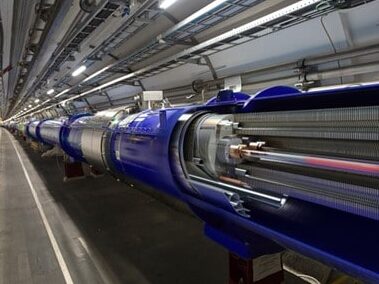
“In its research, CERN pushes the limit of superconductivity to reach record energy levels and operates one of the largest vacuum systems in the world,” explains Paolo Chiggiato, leader of the Vacuum, Surface and Coating group at CERN. “In particular, to avoid collisions with residual gas molecules inside the accelerators, we must reach extreme levels of vacuum. Vacuum is also used at CERN as a thermal insulator for our superconducting magnets. We believe that this know-how can be successfully applied to evaluate the technological solutions proposed to insulate the superconducting cables developed by SuperNode”.

Figure 1: Subsea Superconducting Cable
Under the terms of the agreement, CERN’s expertise in the areas of cryogenics and vacuum will be utilised to test and analyse sample materials and subsystems for their suitability in SuperNode’s superconducting cable systems. The candidate materials will be subject to temperatures, pressures and environments replicating those that subsea and terrestrial superconducting cables will face over their operational lifecycle.
CERN will also design and develop a state-of-the-art test rig for the validation of scale prototypes. An engineer from SuperNode will be trained at CERN, to facilitate knowledge sharing between the partners. The bespoke test rig will ultimately be installed in SuperNode’s Dublin Headquarters the ‘European Cryogenic Centre for Superconductors’.
This collaboration is a significant milestone for SuperNode, and the company is committed to developing ground-breaking solutions for power transmission, addressing the energy needs of the world while minimising the environmental and carbon footprints of energy provision.
SuperNode specialises in the development of innovative energy transmission cables, harnessing the characteristics of superconductive materials. Superconductivity is a phenomenon that occurs in certain materials when they are cooled below their critical temperature (typically -180°C for High Temperature Superconductors). The unique characteristics of superconductors include zero electrical resistance, leading to zero electrical losses, and a very high power density.
Superconducting cables are capable of transferring very large amounts of power efficiently over long distances in a much smaller surface area than conventional cables. They can also operate at higher currents and therefore lower voltage levels than conventional copper-based cable technology, meaning they require significantly less infrastructure, materials and space and have a smaller environmental footprint. Superconducting cables will be a critical enabling technology for a renewables powered future.

Figure 2: Underground Superconducting Cable
Physicists and engineers at the CERN use the world’s largest and most complex scientific instruments to probe the fundamental laws of nature. CERN’s mission is: to provide a unique range of particle accelerators, to perform world-class research in fundamental physics, to unite people from all over the world, and to push the frontiers of science and technology, for the benefit of all.
This project stems from the CERN Innovation Programme for Environmental Applications (CIPEA), which is supported by CERN Knowledge Transfer group. CERN’s technologies and expertise are available for scientific and commercial purposes through a variety of technology transfer opportunities. The CERN Knowledge Transfer group can help companies tap into this potential and find solutions for them based on CERN’s many areas of expertise.
SuperNode CEO John Fitzgerald will be presenting at CERN’s Knowledge Transfer (KT) seminars on the 26th of April at 10am His presentation is titled ‘Overcoming the Challenges of Power Transmission in the Age of Renewables’. During the talk he will address the challenges of power transmission and highlight how SuperNode’s superconducting cables can provide a solution. You can watch his presentation on the KT seminar website.