
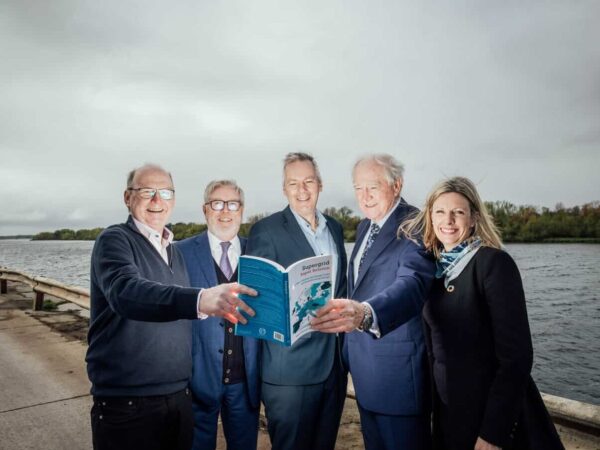
Move must happen to overcome bureaucratic inertia that is stifling pace of delivery
Ireland targets 5GW by 2030 but has 100 times capacity of Germany which targets 40GW by 2035
Responsibility for harnessing “the greatest opportunity in the history of the State” – floating wind energy generation on the Atlantic seaboard – should be handed to the Department of the Taoiseach, a gathering of renewable industry experts has heard.
The consensus from industry experts at University of Limerick for the regional launch of renewable energy pioneer Eddie O’Connor’s book Supergrid Super Solution – co-authored with journalist Kevin O’Sullivan – was that while the opportunity for environmental, economic and social transformation from Europe’s best wind resource is unprecedented for the State, the pace of delivery is alarmingly slow.
Meanwhile, Mr O’Connor also told the event, which was attended by over 100 industry stakeholders and politicians from government and opposition, that at a time when the wind industry should be hurtling towards becoming the biggest contributor towards solving climate change and energy security, manufacturers are, instead, nosediving into bankruptcy.
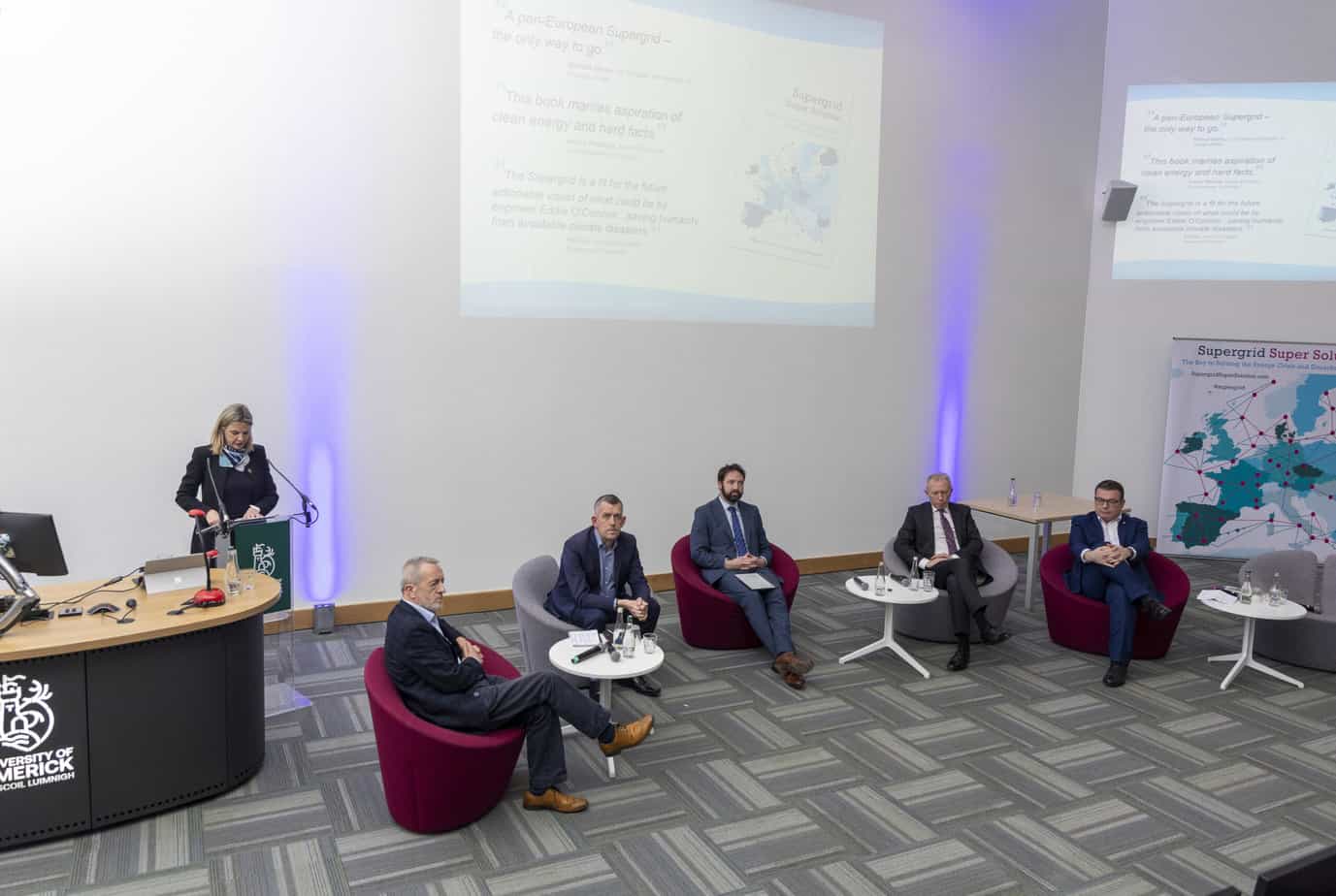
Val Cummins Chairing a panel of MEP Séan Kelly (Fine Gael), TD Maurice Quinlivan (Sinn Féin), TD Brian Leddin (Greens), Senator Timmy Dooley (Fianna Fáil), TD Alan Kelly (Labour), pic Arthur Ellis
The Airtricity and Mainstream founder and champion of the European Supergrid concept through his Supernode Ltd company led the calls, and received much support at the event, for responsibility for realising Ireland’s opportunity to become a global renewable energy giant to shift to the Department of the Taoiseach.
“We have an opportunity now that is the greatest in the history of the State. Ireland has the capacity to supply up to 10% of Europe’s power by 2050 and much more beyond that. Right now, we’re not to dissimilar to the Middle East in the 1940s when it began its oil and gas journey. That has made nations like Saudi Arabia global financial powerhouses and that’s what Ireland can become. The big difference is our energy is green and it’s the solution the world is waiting for.
“Literally, we have 100 times more offshore territory than Germany and far greater winds and yet they have an ambition for Germany 40GW of offshore wind power capacity by 2035. Our ambition is to deliver 5GW by 2030. So what does that say.”
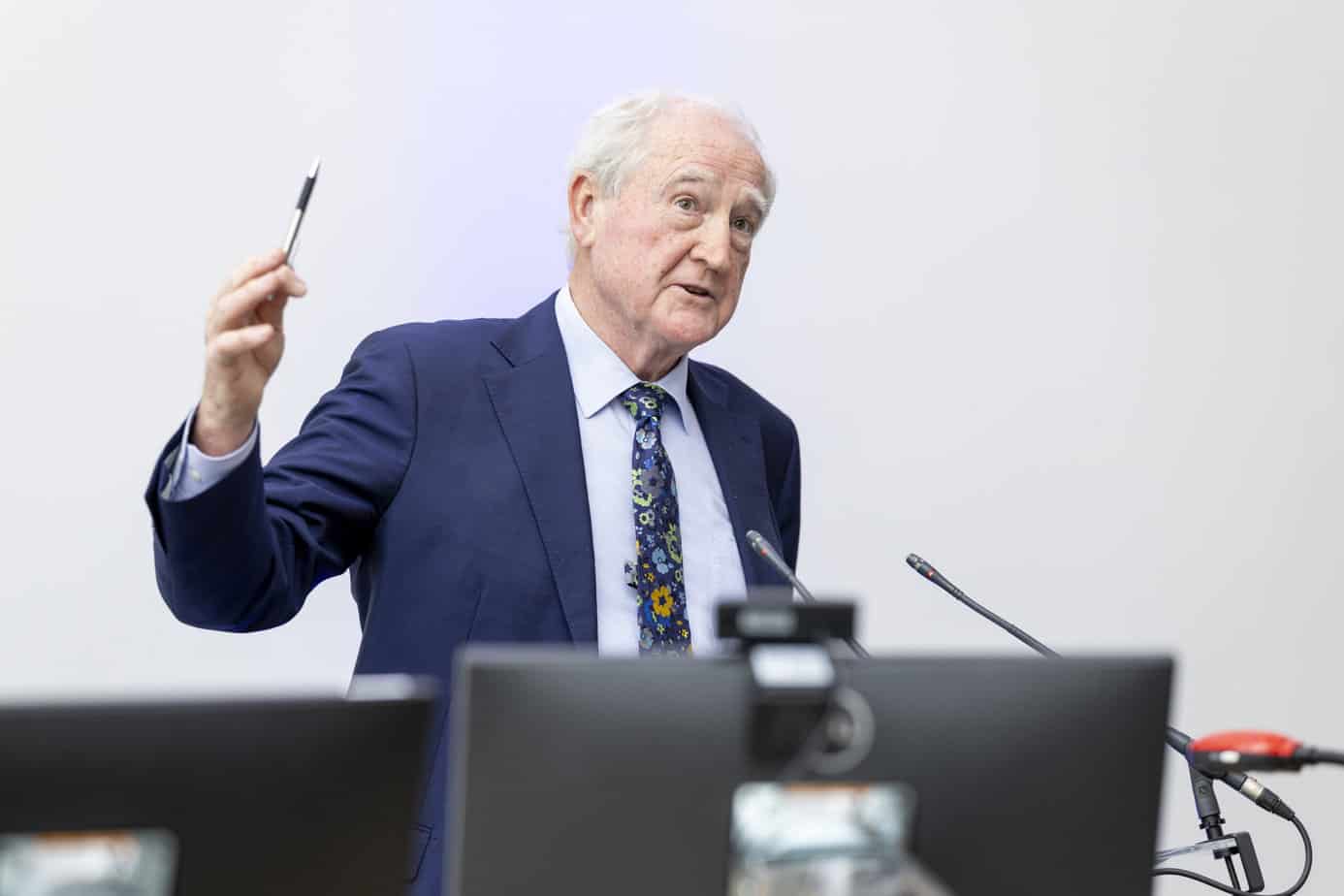
Eddie O’Connor, Founder & Chair of SuperNode, Author of ‘Supergrid Super Solution’, pic Arthur Ellis
To achieve this, however, Mr O’Connor said that the slow pace of delivery must end and responsibility needs to move to where the power is, the Taoiseach’s office. “What we have to do straightaway is we have to get over the bureaucratic inertia. We need real power to be brought to this equation. And to me, the Department of the Taoiseach and the chief civil servant there is where the power rests and where this must be delivered from. The Department has the power to tell secretaries in other departments what to do. Power used benignly, in the interests of the long term goals of Ireland, is the great function of the department of the Taoiseach.”
He continued: “We’ve proposed this and I think we’re getting there. If you compare Ireland now with what it was like five years ago, we’ve moved a gigantic distance, but we need to move another gigantic distance.”
Specifically regarding the Supergrid concept, he said: “You can’t decarbonise without a super grid. Where are the resources? The resources are here. They’re not in Germany. They’re certainly not in Poland, not in Eastern countries of Europe. They don’t have the resources, we and the Mediterranean, with its solar opportunities, have. So, let’s link it together and we have a perfect, limitless bank of energy with incredible synergies. When the sun isn’t shining, the wind is generating and vice versa.”
Mr O’Connor’s comments were roundly supported. Said Val Cummins, Managing Director at Simply Blue: “The fundamental question is why are we not progressing faster? This is a massive opportunity in terms of floating offshore, in terms of port development, in terms of grid, the transmission system. There’s so much been work being done on all of those elements. But fundamentally, this work needs to be matched by a system of delivery and it’s clearly not there.
“There’s an industry consensus that we’re not managing to deliver. And I think Eddie O’Connor’s recommendations in relation to transforming the architecture of the system, such that it’s fit for purpose to deliver, is a key point. We showed we could do it for COVID. That was a crisis at the time. The climate is a crisis. And I think the take home is it’s time for action.”

Val Cummins, Managing Director Val Cummins, pic Arthur Ellis
Said John Fitzgerald, CEO of Supernode: “The ambition to do 30, 40 or even 70 gigawatts off the West Coast is not matched by government mandates on the agencies they direct. So until they’re joined up, we’re really going to struggle to realise the potential.”

Joh Fitzgerald, CEO SuperNode, Pic Arthur Ellis.
Said Pat Keating, CEO of Shannon Foynes Port Company, which has maritime responsibility for the Shannon Estuary – which will be a key staging post for development of the floating offshore wind fields: “We have a huge resource on our doorstep here, climate action is happening so we have an obligation even more so than an opportunity. Other countries that don’t potentially have the same offshore opportunity as us will locate the supply chain in their countries and we lose out then on the big value-add opportunity and literally tens of thousands of jobs. This is just too big for us as a nation not to grab but time is not on our side actually and we need to get moving.”
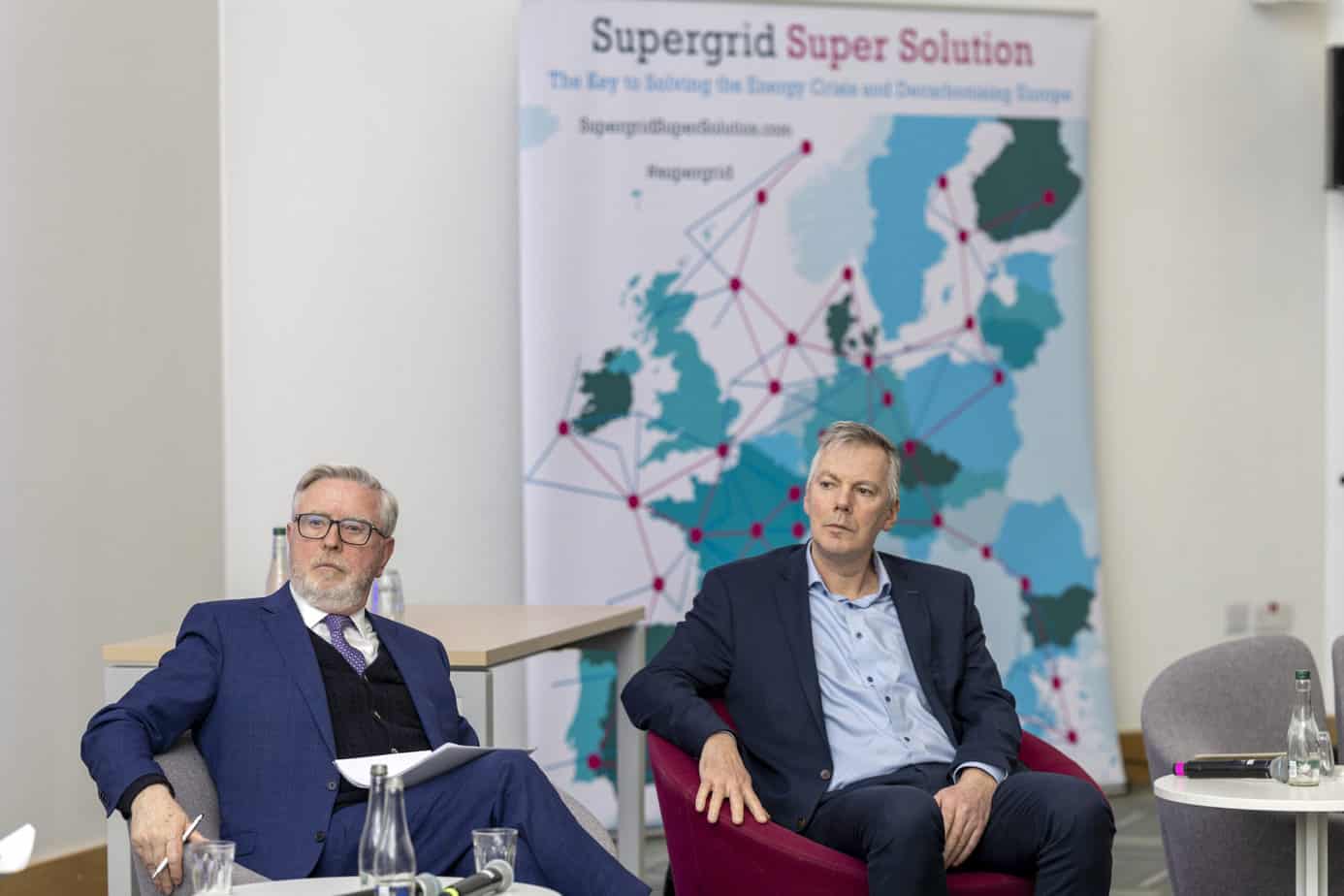
Pat Cox, former President of the European Parliament (left), Pat Keating, CEO Shannon Foynes Port (right), Pic Arthur Ellis
Meanwhile, Mr O’Connor warned of the risks of the wind turbine manufacturing industry crumbling and the supply chain for ramping up the industry having to shift entirely to China. “For the countries that are ramping up with their offshore wind, and Ireland is clearly way behind there, the reality is that the manufacturers are suffering huge losses and reducing employment levels as a result. If there’s an expectation on the part of governments that they will be able to ramp up supply to meet demand for turbines, then it’s not going to be met because no one is going to produce turbines at these losses.
“Europe needs to wake up to this. The wind industry is on its knees, making huge losses that are not sustainable while the oil and gas industry is making record profits. If we are serious about climate action and unwinding from oil and gas and, indeed, the dependency in Europe on Russian oil and gas, then the only answer is renewables but the industry is at risk of going bankrupt. The reality is that unless we start supporting the very industry with the solution to the greatest crisis of our times, then the only turbines we’ll be able to get will be coming from China.”
—End—
The Supergrid Super Solution book is available from SupergridSuperSolution.com and major book shops online and offline. The Press Pack can be downloaded from SupergridSuperSolution.com . This also includes this news release, a two-page summary of the book, the book cover, photos of the authors and a 16-page summary of the book’s key points.
For further information or to arrange an interview with Eddie O’Connor, contact:
Philip McCann t: 00 353 86 075 7936 e: philip.mccann@supernode.energy